
Shared Recipe
Spiced Hard Apple Cider
Ciderby Fermo Kitchen
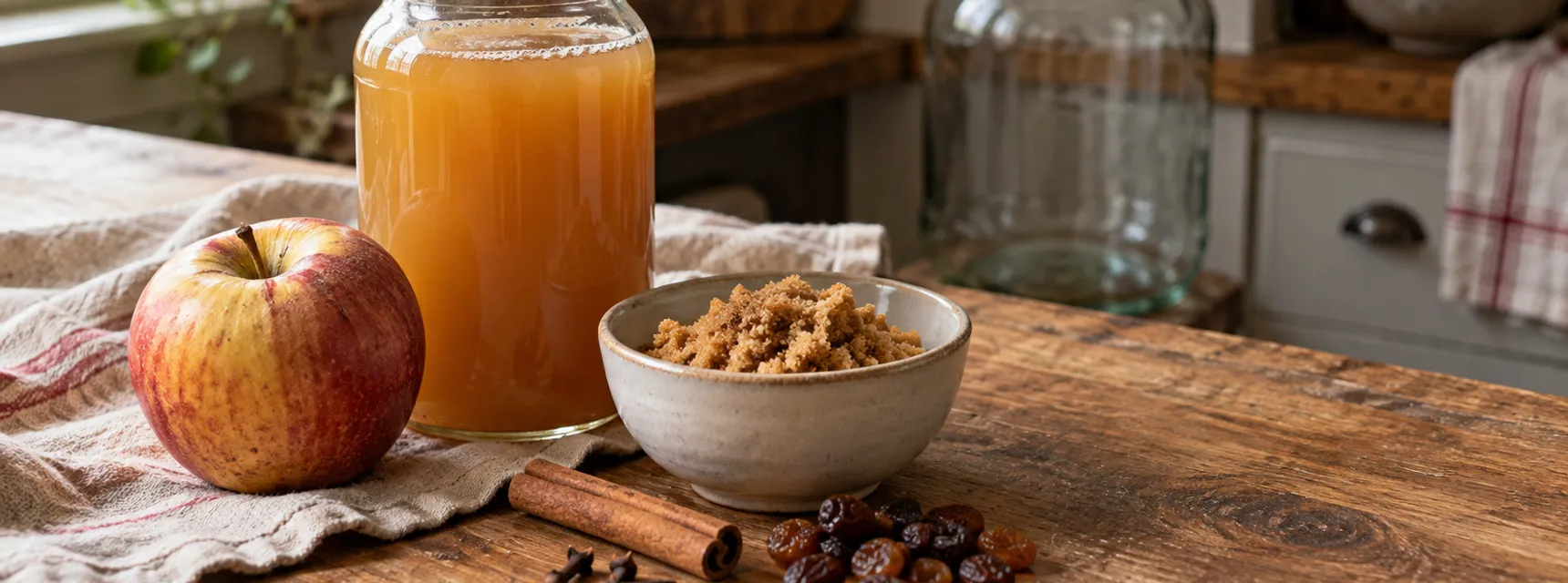
Easy beginner hard cider made from preservative-free apple juice (citric acid is fine), sweetened with brown sugar, steeped with cinnamon, cloves and raisins, then fermented dry with champagne yeast. Perfect for fall and winter. Secondary and bottling durations not specified in source, estimated; final gravity check added for safety. Source: Grow Forage Cook Ferment, Homemade Hard Cider
Units
Recipe Steps
Day 0 (start)
Sanitize Equipment: Sanitize everything that will touch the cider (pot, spoon, funnel, ladle, jug, airlock and stopper) following your sanitizer's directions, and keep some sanitizer aside in case something needs a second pass.
4.5 lb of apple juice (with 10% sugar concentration)
Warm Juice: Pour about half of the apple juice into the pot and warm it over medium heat, do not let it boil.
1 lb of brown sugar (with 97% sugar concentration)
Dissolve Sugar: Add the brown sugar to the warm juice, stir until fully dissolved, then remove the pot from the heat.
1 pcs of cinnamon stick
Add Cinnamon: Place the cinnamon stick into the empty fermenting jug.
3 pcs of whole cloves
Add Cloves: Add the whole cloves to the jug.
10 pcs of raisins
Add Raisins: Add the raisins to the jug, they act as a natural yeast nutrient and do not flavor the cider.
Transfer and Steep: Funnel the warm sweetened juice from the pot into the jug and let it steep with the spices for about 20 minutes.
3 lb of apple juice (with 10% sugar concentration)
Top Up Juice: Top off the jug with the remaining apple juice, leaving a little headspace below the neck; any leftover juice can be enjoyed on the side.
Cap and Mix: Cap the jug and shake to combine everything.
Check Temperature: Make sure the juice has cooled to 90°F (32°C) or below before pitching the yeast.
2.5 g of Red Star Premier Blanc
Pitch Yeast: Add the yeast directly to the jug (the exact amount is not critical, Cote des Blancs also works) and store any unused yeast sealed in the refrigerator.
Aerate and Fit Airlock: Cap the jug again and shake vigorously for a minute or two to aerate and distribute the yeast, then fill the airlock with water to its fill line and fit it firmly on the jug with the stopper.
Store to Ferment: Keep the jug in a cool (not cold) place out of direct sunlight, such as a pantry or closet.
Day 2
Check for Activity: Bubbles in the jug and airlock should have started within hours or overnight; if there is still no activity, give it a few more days, as persistent silence usually means the juice contained preservatives.
Day 21
Fermentation Slowing: Bubbling should be slowing down or stopping; leave the jug undisturbed in its cool spot so the sediment settles and the cider clears (warmer conditions finish faster).
Day 28
Check Gravity: Confirm fermentation is finished: airlock activity has fully stopped and a hydrometer reading stays stable over a couple of days before bottling (added for safety, not in original source).
Bottle Cider: Siphon the cider off the sediment into sanitized flip top bottles using an auto siphon and bottling wand, leaving the yeast layer behind.
Day 42
Ready to Enjoy: The bottles have conditioned and the cider is ready to drink.